On Thursday mornings through May, cinematographer Devan Scott takes us on a journey through the history of lighting in cinema, tracing its development from the sunlit studios of early silent film through the three-point setups that defined classical Hollywood realism and film noir to modern techniques of motivated lighting. We’ll explore how artistic trends and evolving technologies — from early incandescent studio lamps to today’s RGB LEDs and digital workflows — have shaped cinema throughout the past century, unpacking the linguistics of lighting via interactive live workshops. Each talk will last approximately 45 minutes, with case study screenings starting at 12:00 pm.
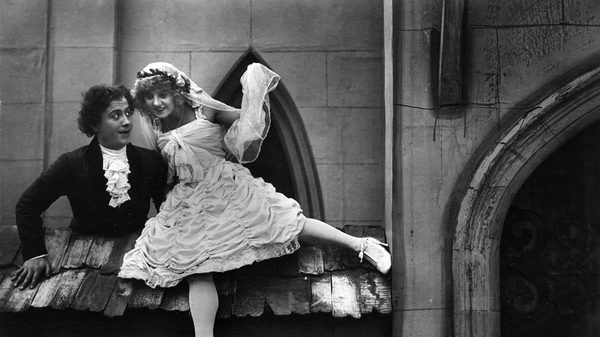
In this first presentation, Devan will introduce the basic principles of film lighting as they were established in the silent era. A leading expert on the early work of Ernst Lubitsch, Devan will also share insights into The Doll, from 1919, which Lubitsch said was his own favourite film from his German period. It’s a wild sex comedy about a timid young man with an enormous dowry who decides to escape the clutches of the female sex by marrying a life-sized mechanical doll. Only Ossi’s not really a toy…
One of the five funniest pictures I’ve ever seen.
Peter Bogdanovich
Deliciously weird for 1919 or any other year… fast-moving, bursting with energy and carefree experimentation, its jokes ranging from sophisticated winks to groaning eye-rollers.
Farran Smith Nehme
Devan Scott
Ernst Lubitsch
Ossi Oswalda, Hermann Thimig, Victor Janson, Gerhard Ritterband
Germany
1919
No Dialogue
Book Tickets
Indigenous & Community Access
Indigenous Access Tickets Community Access Tickets Ticket Donation Requests
Credits
Screenwriter
Hanns Kräly, Ernst Lubitsch
Cinematography
Theodor Sparkuhl, Kurt Waschneck
Original Music
Martin Smolka
Art Director
Kurt Richter
Also in This Series
Film Studies: Motivated Lighting examines the evolution of lighting in cinema, from the early 1900s to present day.

Black Bag
In the last of his studies in the evolution of cinematography, Devan Scott surveys the modern era of digital photography and LED lighting, focusing in particular on the radical work of Steven Soderbergh, who regularly serves as his own cinematographer.