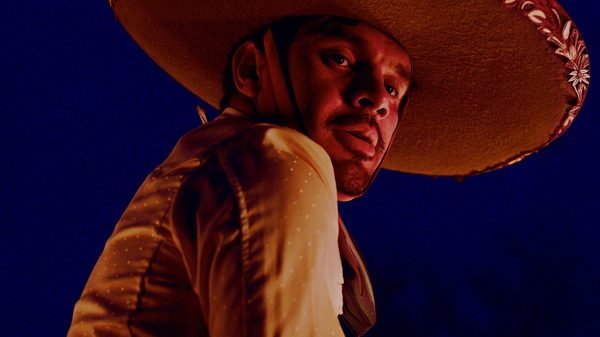
Every Christmas in Penjamillo, Michoacán, the jaripeo — an annual rodeo of bull riding, horses, music, drinking, and dust — becomes the town’s public theatre of masculinity. But there’s more to this rugged display than its macho exterior suggests, and as filmmaker Efraín Mojica returns home, she witnesses the spectacle with new eyes. Co-directed with Rebecca Zweig, Jaripeo looks beneath the arena’s noise to reveal a queer undercurrent of coded glances, secret hookups, double lives, and desire that has always moved through the tradition.
Mojica and Zweig don’t treat this world as a contradiction. The rodeo becomes both ritual and cover, a place where machismo is performed and quietly undone. The film follows queer rancheros through the arena, the after-party, and the private spaces where tradition begins to slip. Premiering in Sundance’s NEXT section before screening in Berlinale Panorama, Jaripeo follows a community making room for itself inside a culture that was never as straight as it pretended to be.
Content Considerations: Animal wrangling, drug and alcohol abuse, psychological distress dealing with shame and secrecy around gender and sexuality
Community Partner


Mexico/USA/France
2026
In Spanish and English with English subtitles
Indigenous & Community Access
Indigenous Access Tickets Community Access Tickets Ticket Donation Requests
Credits & Director
Executive Producer
Carrie Lozano, Ian Bonhôte, Lizzie Gillett
Producer
Sarah Strunin
Cinematography
Josué Eber Morales, Gerardo Guerra
Editor
Analía Goethals
Original Music
Martón Móra, Emilia Ezeta

Efraín Mojica
Efraín Mojica is a photographer, filmmaker, and multidisciplinary artist from Michoacán living in Mexico City. Their work has been shown in galleries around the world, including the Kunstverein Neukölln and MZ galleries in Berlin, Magia Roja in Barcelona, the Factory in Seattle, and most recently, Museo Tlatelolco in Mexico City. Video art has always been a central part of Mojica’s work, and their filmmaking is heavily influenced by their work as a conceptual artist exploring the translation and interpolation of different mediums: light, sound, and matter. Jaripeo (2026) is Efraín’s first feature documentary.

Rebecca Zweig
Rebecca Zweig is a filmmaker, journalist, and poet based in Mexico City. Her work has been featured in The New York Times, The Nation, and Nexos Revista, among others, and she has been supported by Chicken & Egg Pictures, the Sundance Institute, SFFILM, and the Points North Institute. She is a graduate of the Iowa Writers’ Workshop, where she was a Teaching-Writing Fellow and a Mitchell/Burgess Scholar. Her filmmaking is shaped by her poetic practice that focuses on the cadences and metaphors of desire.
Spectrum
See more films in this series

Last Movies
What would film history look like reorganized around the last movies various cultural figures watched before they died? Last Movies embraces this simple concept to offer a deliberately skewed and mordantly funny love letter to cinema.

Jaripeo
Efraín Mojica and Rebecca Zweig set their sights on Penjamillo, Michoacán, where the annual Jaripeo — a rodeo of bull riding, drinking, and dust that serves as the town’s public theatre of masculinity — becomes a stage for queer desire.

Aanikoobijigan [Ancestor/Great-Grandparent/Great-Grandchild]
In Aanikoobijigan, Indigenous repatriation specialists work to bring the remains and funerary objects of Ancestors home from institutional collections. This is a film shaped by memory, dignity, and a duty of care.

Crocodile
In Crocodile, a group of young, self-taught filmmakers turn Kaduna's streets, homes, and residents into the raw materials of sci-fi cinema. This Tribeca Viewpoints winner examines filmmaking as a means to overcome a city's constraints.

Let Them Be Seen
Let Them Be Seen is an absurdist portrait of the town of Tapoleng in South Africa’s Eastern Cape, moving through churches, spaza shops, and a Jam Alley re-enactment to document a village reshaping faith and community in post-apartheid life.


Yo (Love Is a Rebellious Bird)
Winner of the Silver Bear for Outstanding Artistic Contribution at this year's Berlinale, Anna Fitch and Banker White’s exuberant documentary combines vérité interviews with a playful mix of puppetry, collage, and insect actors to memorialize a friend.
Image: © Mirabel Pictures
