North American Premiere
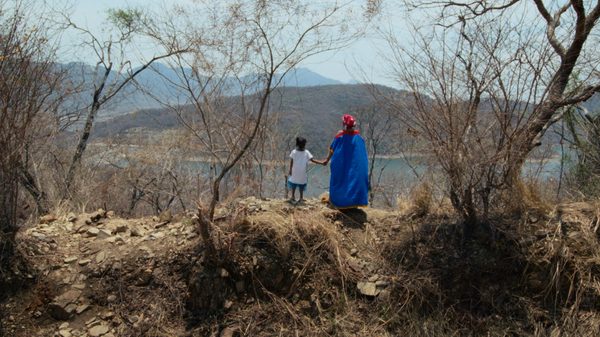
In Colombia’s La Guajira desert, three Wayuu guardians are fighting to protect their ancestral land, water, and spiritual traditions. When a reservoir promised to local communities was instead diverted to serve a polluting mine, it removed access to drinking water; now, wind-energy companies are claiming vast areas of Wayuu territory, erecting wind farms on sacred burial grounds and offering little in return. Against this backdrop of corporate exploitation and broken government promises, the Wayuu are once again being asked to sacrifice their land and traditions for someone else’s future.
Made with profound artistic sensitivity, The Wind’s Thirst documents the Wayuu community members, weaving together their intimate testimonies and poetic stories with striking images of La Guajira. While painfully specific, the film reveals a universal pattern of the promise of progress, as Indigenous communities fight to protect what has sustained them for generations. Ultimately, The Wind’s Thirst is about endurance and imagining a future for the Wayuu on their land: “Governments come and go, but we will always be here.”
Media Partner

Community Partner


Canada/Colombia
2026
In Wayunaiikii and Spanish with English subtitles
Open to youth at VIFF Centre
At Fifth Ave
Indigenous & Community Access
Indigenous Access Tickets Community Access Tickets Ticket Donation Requests
Credits & Director
Producer
Alejandro Valbuena
Screenwriter
Alejandro Valbuena
Cinematography
Alejandro Valbuena
Editor
Federico Casteñada
Original Music
Andres Galindo

Alejandro Valbuena
Alejandro Valbuena is an Arawak filmmaker working across fiction and documentary, and his films explore communities the industry has never looked at. His debut documentary, The Wind’s Thirst (2026), was shot over five years inside the Wayuu community of La Guajira; it premiered at Sheffield DocFest 2026, won the Hot Docs Breakthrough Pitch, and travelled through Cannes Docs, Docs Barcelona, and Eurodoc. His fiction feature Carnarium received a Telefilm Springboard invitation. He is an EFM Toolbox, Eurodoc, and DOC alumnus.
Insights
See more films in this series

Birds of War
Told through phone videos, voice notes, texts, and news footage, Birds of War documents the love story of Lebanese journalist Janay Boulos and Syrian activist Abd Alkader Habak as their connection deepens and their communications grow in urgency.

A Place of Absence
A Place of Absence follows the Caravan of Mothers of Missing Migrants along migration routes through Mexico and toward the United States, while tracing the disappearance that shaped the filmmaker’s own family history.

A Distant Call
In the South Sulawesi province of Indonesia, Eka, one of the few remaining bissu — spiritual leaders who embody the aspects of all genders — struggles to reconcile their identity with community expectations and their own devout Muslim faith.

Whispers in May
Whispers in May follows Qihuo and her friends in China’s Liangshan Mountains as childhood gives way to womanhood. It blends close observation and scenes of the girls' search with animated fragments of Yi oral myth to create a hypnotic coming-of-age film.


Who Moves America
Who Moves America follows UPS teamsters through their 2023 contract negotiations. Director Yael Bridge turns meetings, rallies, votes, and everyday conversations into a clear-eyed portrait of solidarity and building power.


Revolutionaries Never Die
Revolutionaries Never Die is Mohanad Yaqubi’s reply to Jocelyne Saab, who passed away before the two could collaborate. Yaqubi's film serves as equal parts tribute, conversation, and partnership with the revolutionary past.

Once Upon a Time in Harlem
Once Upon a Time in Harlem splices together footage shot by William Greaves in 1972 of a group of Harlem Renaissance luminaries in conversation at Duke Ellington’s townhouse. The film is a living archive of memory, disagreement, style, and Black genius.

Nuisance Bear
Winner of the highly coveted Sundance Grand Jury Prize for Documentary, Nuisance Bear follows a polar bear through Churchill, Manitoba, where the town profits from bears as spectacle while treating their arrival as a problem.

Closure
In Closure, Michał Marczak follows Daniel, a father searching the Vistula River after his teenage son disappears from Warsaw’s Gdański Bridge. Resisting true-crime spectacle, this is a film questions whether hope can sometimes keep you trapped.

Kikuyu Land
Kikuyu Land follows Mr. Mungai’s struggle to reclaim family land taken during the colonial era. Through personal stories and archival research, the film explores the enduring impact of land dispossession in Kenya.

Gabin
Filmed over 10 years, Gabin follows Gabin Jourdel from age 8 to 18 and the animals, schoolwork, chores, and imagined futures that define his youth. As he grows, his adolescence becomes a question of inheritance and choosing one’s own future.