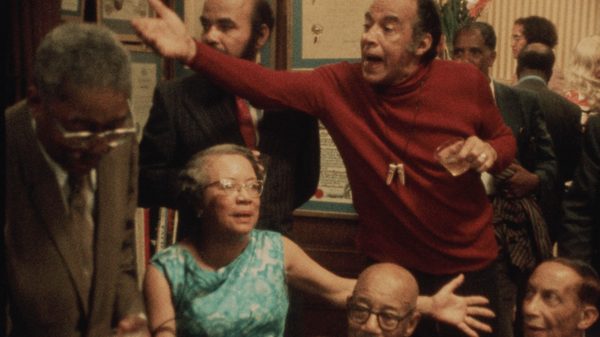
In 1972, pioneering filmmaker William Greaves gathered surviving luminaries of the Harlem Renaissance inside Duke Ellington’s townhouse and let the cameras roll. Eubie Blake, James Van Der Zee, Arna Bontemps, Richard Bruce Nugent, Gerri Major, Romare Bearden, and others reminisce, argue, laugh, interrupt, and remember a movement built from Black genius in motion. More than 50 years later, Once Upon a Time in Harlem arrives as a moving-image artifact, alive with the presence of its towering figures returned right into the room.
Greaves, the visionary behind Symbiopsychotaxiplasm: Take One (1968), left behind 60,000 feet of 16mm footage to be rediscovered for this film. His son David Greaves (one of the original camera operators) and David’s daughter Liani bring the footage into the present as both family inheritance and public archive. Premiering at Sundance before screening in Cannes Directors’ Fortnight, the film is a portal into a room of style, memory, disagreement, and brilliance that reminds us a renaissance is not only remembered, it is reborn.
Didn’t get a ticket? Just want to see it again? Once Upon a Time in Harlem will be returning to the VIFF Centre starting Oct 23.
Content Considerations: Discussions of slavery and racism
Media Partner

Community Partner


Aaron Douglas, Richard Bruce Nugent, Ernest Crichlow, Eubie Blake, Leigh Whipper, Arna Bontemps
USA
2026
English
At VIFF Centre
At Fifth Ave & The Rio
Book Tickets
Indigenous & Community Access
Indigenous Access Tickets Community Access Tickets Ticket Donation Requests
Credits & Director
Producer
Liani Greaves, Anne de Mare
Cinematography
David Greaves, Doug Harris, David Hoffman, Jerry Pantzer
Editor
Lynn True, Anne de Mare
Original Music
Tamar-kali

William Greaves
Over the course of 52 years, William Greaves has created an immense body of work that documents, reflects on, and celebrates the African American experience. From 1953 to 2005, Greaves was the producer, writer, director, cinematographer, and/or editor of 79 films spanning documentary, narrative, and hybrid forms. From fierce battles for civil rights (Nationtime, 1972) to the remarkable achievements of inspiring leaders (Ida B. Wells: A Passion for Justice, 1989) and onward through his astonishing, uncategorizable Symbiopsychotaxiplasm films, Greaves’s filmography constitutes a unique and powerful portrait of the United States and its checkered history.
Filmography: A Tribute to Jackie Robinson (1990); Ralph Bunche: An American Odyssey (2001); Symbiopsychotaxiplasm: Take 2 1/2 (2005)
David Greaves
David Greaves is an award-winning filmmaker and journalist. He worked as cinematographer and/or editor on many of his father William Greaves’ films, including the famed documentary feature Symbiopsychotaxiplasm: Take One (1968). He was also one of the original cameramen during the 1972 shoot for Once Upon a Time in Harlem (2026). In 1996 he founded DBG Media and the award-winning independent newspaper Our Time Press. As a journalist and writer, he has won numerous awards from the Independent Press Association and New York Association of Black Journalists, including first place awards for investigative reporting, in-depth reporting, and personal commentary.
Missing VIFF? Check Out What's Playing at the VIFF Centre

The Haunting
Directed by Robert Wise in 1963, The Haunting is a classic exercise in the suggestive power of cinema, adapted from Shirley Jackson's 1959 best-seller, The Haunting of Hill House, a provocative blend of supernatural and psychological horror.

Once Upon a Time in Harlem
Once Upon a Time in Harlem splices together footage shot by William Greaves in 1972 of a group of Harlem Renaissance luminaries in conversation at Duke Ellington’s townhouse. The film is a living archive of memory, disagreement, style, and Black genius.


Possible Love
Lee Chang-dong’s first film since Burning (2018) is a sardonic, slow-burning satire about two couples: a documentary filmmaker married to a wealthy businessman, and a working-class family struggling to make ends meet after the husband has been laid off.


Get Out
Guess who's coming to dinner? Daniel Kaluuya is the Black boyfriend justifiably anxious about meeting his white girlfriend's folks for the first time in Jordan Peele's satiric modern horror classic, one of a series curated by our VIFF+ Premium members.