Canadian Premiere
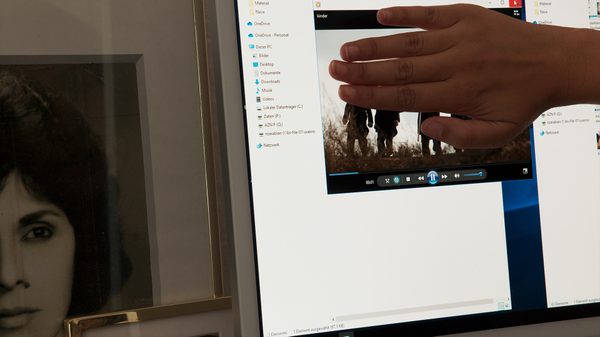
In 2014, during the war in Syria, ISIS released a full-length propaganda film with the aesthetics of a blockbuster. In an attempt to reconcile the dual forces of terror with his own fascination, former film critic and video essayist Kevin B. Lee tries to use formal film analysis to examine the film, only to realize he can’t escape the weight of violent spectacle.
An immersive, essayistic documentary, Afterlives is bursting with ideas. Revolving around the central metaphor of Medusa — inspired by a museum exhibit — Lee considers the limits of observation in an age mediated by endless iterations of extreme images. Compelled to dig deeper, he turns to artists and activists, emerging technologies and historical research, to unearth how the violence of extremist media retains its power over time and seeps out into the groundwater of our digital environments. Constantly probing and reevaluating its own framework, the film rejects reductive answers or cliched responses to questions about violence, extremism, justice, and art.
Content Considerations: Extremist material, terrorist propaganda
Community Partner

Morehshin Allahyari, Nava Zarabian, Anne Speckhard, Sebastian Baden, Bernd Zywietz, Yorck Beese
Germany/France/Belgium
2025
English
Indigenous & Community Access
Indigenous Access Tickets Community Access Tickets Ticket Donation Requests
Credits & Director
Producer
Caroline Kirberg
Screenwriter
Kevin B. Lee
Cinematography
Ginan Seidl
Editor
Janina Herhoffer
Original Music
Maya Shenfeld, Tadklimp

Kevin B. Lee
Kevin B. Lee is a filmmaker and educator who has produced over 360 video essays exploring film and media. His works have screened in prestigious venues, including his award-winning Transformers: The Premake, which introduced the “desktop documentary” format and was named one of the best documentaries of 2014 by Sight & Sound. In 2016, the Austrian Filmmuseum programmed a retrospective of his video essays. He was the 2017 Artist in Residence at the Harun Farocki Institut in Berlin. He is the Locarno Film Festival Professor for the Future of Cinema and the Audiovisual Arts at Università della Svizzera italiana.
Photo by Victor Brigola

Spectrum
See more films in this series

Last Movies
What would film history look like reorganized around the last movies various cultural figures watched before they died? Last Movies embraces this simple concept to offer a deliberately skewed and mordantly funny love letter to cinema.

Jaripeo
Efraín Mojica and Rebecca Zweig set their sights on Penjamillo, Michoacán, where the annual Jaripeo — a rodeo of bull riding, drinking, and dust that serves as the town’s public theatre of masculinity — becomes a stage for queer desire.

Aanikoobijigan [Ancestor/Great-Grandparent/Great-Grandchild]
In Aanikoobijigan, Indigenous repatriation specialists work to bring the remains and funerary objects of Ancestors home from institutional collections. This is a film shaped by memory, dignity, and a duty of care.

Crocodile
In Crocodile, a group of young, self-taught filmmakers turn Kaduna's streets, homes, and residents into the raw materials of sci-fi cinema. This Tribeca Viewpoints winner examines filmmaking as a means to overcome a city's constraints.

Let Them Be Seen
Let Them Be Seen is an absurdist portrait of the town of Tapoleng in South Africa’s Eastern Cape, moving through churches, spaza shops, and a Jam Alley re-enactment to document a village reshaping faith and community in post-apartheid life.


Yo (Love Is a Rebellious Bird)
Winner of the Silver Bear for Outstanding Artistic Contribution at this year's Berlinale, Anna Fitch and Banker White’s exuberant documentary combines vérité interviews with a playful mix of puppetry, collage, and insect actors to memorialize a friend.
Image: © Mirabel Pictures
