Born in Poland in 1926, Andrzej Wajda was 13 when his country was overrun by Germany at the outbreak of the Second World War. Stalin’s Red Army massacred thousands of Polish prisoners of war at Katyn in 1940 — including Andrzej’s father. He joined the resistance at 16 in 1942 and witnessed the transportation of Jews to the death camps built on Polish soil. After the war he saw his country fall under totalitarian communist control, a Soviet satellite for the next four decades, and he was on the frontlines when dissidents stood up to demand democracy in the 1980s. Wajda reflected all these events in his work: more than 40 films between 1955 and 2016, many of them wrestling with the dominant narratives of the 20th Century: the push and pull between fascism and communism; freedom and totalitarianism; war and peace.
For Wajda, cinema was a place where history could be investigated, ideologies interrogated, and authorities held to account. The father of Polish cinema, he worked with, influenced and mentored the likes of Krzysztof Kieslowski, Roman Polanski, Jerzy Skolimowski, Andrzej Zulawski and Agnieszka Holland. Many of these movies are long-established art house classics; many more demand to be rediscovered, in sparkling 4K restorations, in this, his centennial year.
Screenings of Andrzej Wajda’s films in North America in 2026 are part of the ‘Wajda 100 Tour – North America’ project, organized by DI Factory with the financial support of the Polish Film Institute. Special thanks to Jessica Rosner.

Ashes and Diamonds
Wajda's first three films all derived from his experience in the Polish underground during WWII. Set in 1945, Ashes and Diamonds is his first masterpiece, and one of the essential films about wartime.

A Generation
Wajda's first film is set in Warsaw, 1942 and concerns a young man much like himself, living in squalor and doing his best to disrupt the German Occupation, eventually falling in with a Communist-leaning Resistance cell.


Innocent Sorcerers
The closest Wajda got to a new wave film (and in fact it was shot before Godard's Breathless) this is an edgy romance about a womanizing jazz musician who hooks up with a liberated young woman over the course of an evening. Scripted by Jerzy Skolimowski.


Everything For Sale
This self-reflexive work serves as both a tribute to Ashes and Diamonds star Zbigniew Cybulski (who died in an accident at 39) and a meta-cinematic exploration of grief, memory, and the filmmaking process itself.

Landscape After The Battle
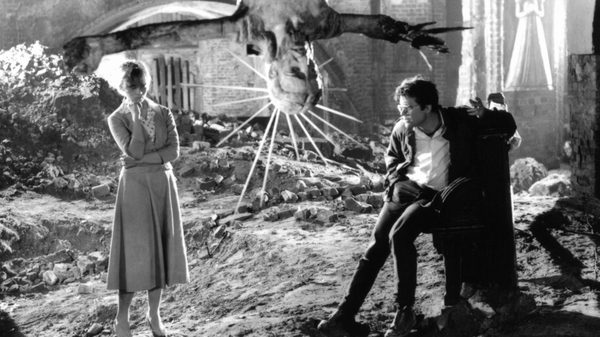
Based on the autobiographical short story collection This Way for the Gas, Ladies and Gentlemen, Wajda's film shows a concentration camp survivor, Tadeusz in a displaced persons camp in the immediate aftermath of WWII.

The Birch Wood
A different side of Wajda: this is a romantic, sensual, bittersweet work. Stanislaw (Olgierd Łukaszewicz) is an ebullient artist who comes to visit his forester brother, Boleslaw (Daniel Olbrychski), a gloomy widower.

The Wedding
This densely allegorical satire is based on a 1901 play by Stanislaw Wyspianski, which was in turn based on a real wedding between a member of the affluent intelligentsia and a farmgirl. The drunken village revelries spiral through the night....

The Promised Land
The Promised Land is a furous, dynamic, richly paradoxical epic of the Industrial Revolution and rampaging capitalism worthy of Zola or Dickens, a movie about three young entrepreneurs determined to get rich at any cost.

Man of Marble
One of the towering achievements in Wajda's career, Man of Marble is a Polish, proletarian Citizen Kane, with a 70s student filmmaker unearthing the fate of a working class hero, a bricklayer celebrated in Stalinist propaganda films in the 1950s.

Rough Treatment (aka Without Anesthesia)
Scripted by Agnieszka Holland, Rough Treatment is a key film of "the cinema of moral anxiety" in Poland in the 1970s, a Kafkaesque account of the dissolution a TV correspondent's marriage, his career, and indeed, everything else by which he sets store.

Man of Iron
Forged in the furnace of the Gdansk shipyard strikes that propelled Poland's first union independent of the communist party, Solidarity, and its leader Lech Welesa, to the forefront of history, Man of Iron is an extraordinary follow up to Man of Marble.

The Maids of Wilko
This wistful tale finds jaded WWI veteran Wiktor (Daniel Olbrychski) returning to the summer estate he used to visit before the war, and to the Wilko farm, where five sisters remember him fondly. Academy Award Nominee: Best Foreign Language Film


